Three Arms, One Question
Mechanisms, assessment, and intervention — pursued across languages and cultures, and now converging in a single program.
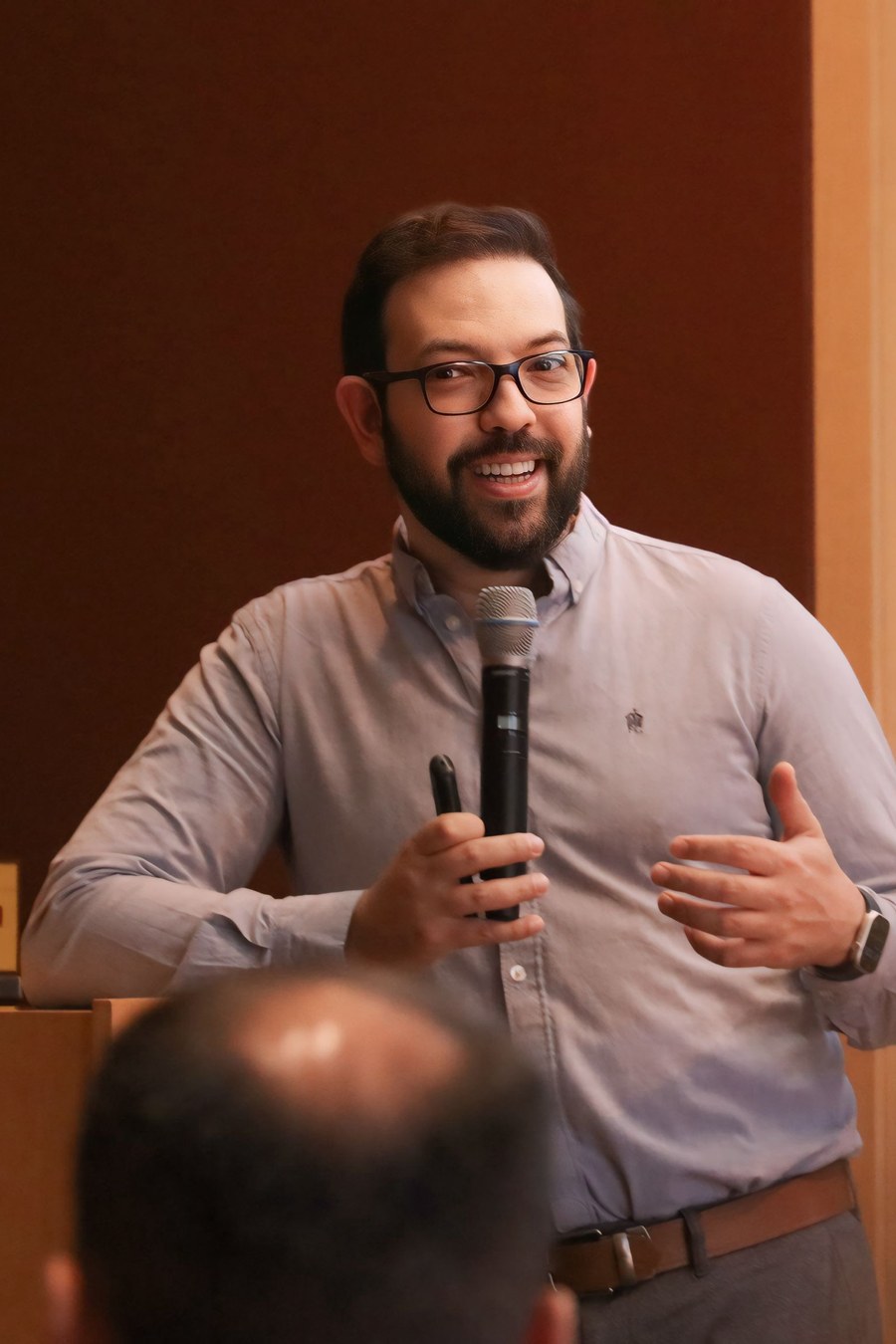
Born in Brazil, Dr. Mayron Piccolo is a Brazilian-American-Italian psychologist and Board Certified Behavior Analyst whose research, teaching, and clinical career center on the mechanisms of psychopathology, including reward processing and response bias, and on mechanisms-based interventions, from a cross-cultural perspective, with implications for assessment and treatment delivery. He pursues this work through three connected arms.
Mechanisms asks how reward processes shape mental health — across eating and weight disorders (anorexia and bulimia nervosa, obesity, and binge eating), the altered reward circuitry of depression, and communal music-making as a social reward. Assessment asks how response biases shape what our instruments capture across languages and cultures, from the “several days” response option on the PHQ-9 to portion-size estimation errors and idioms of distress in trauma. Intervention turns those findings into mechanisms-based interventions built to scale, and into direct clinical work with the communities that need them. Each arm includes digital implementation: telehealth psychotherapy with a multilingual immigrant caseload, fully remote experiments, and interventions designed to run without a clinician in the room.
He earned his PhD at the University of Fribourg (Switzerland), followed by research training at McLean Hospital and clinical training at Cambridge Health Alliance (both Harvard Medical School). A clinician as well as a scientist, he provides multilingual psychotherapy (English, Portuguese, Spanish, and French) to immigrant communities at Cambridge Health Alliance and consults to schools through McLean Hospital, and he teaches award-winning courses on reward, psychopathology, and the psychology of music at Harvard, with earlier teaching at Columbia, NYU, and universities in Switzerland and Brazil.
His three arms are now converging in a single program, TEMPO (Tracking Everyday Multimodal Phenotypes of Reward for Just-in-Time Intervention Across Cultures): reading reward-related vulnerability directly from behavior and physiology, with almost no reliance on what a person can put into words, and delivering brief, mechanism-matched support in the moment it is needed, on a smartphone and a wearable, across languages and cultures.
Massachusetts Licensure
- Licensed Psychologist
- Licensed Applied Behavior Analyst (LABA)